At the Center for Fertility and Gynecology in Los Angeles, CA, we dedicate a significant portion of our practice to oocyte (egg) donation. This unique and modern variation of in-vitro fertilization (IVF) is the most successful type of fertility treatment in existence.
The process of egg donation is based on well understood patterns of human physiology involving the brain, ovaries and uterus. During a natural menstrual cycle, a woman’s brain sends signals to her ovaries in order to stimulate the selection and growth of a single egg. As that egg grows, the ovary produces estrogen which sends a signal to the uterus. The estrogen stimulates growth of the tissue lining the inner cavity of the uterus, the endometrium.
Once the egg has grown sufficiently (approximately 14 days) ovulation occurs and the egg is released for potential fertilization. At this time, the ovary begins to produce another hormone called progesterone. The progesterone acts upon the endometrium and prepares it for implantation of a fertilized egg.

With egg donation, the same ovarian and uterine stimulations occur; the difference is that the uterus and ovary happen to be in two different bodies. The key to this process is keeping the separated uterus and ovaries in synchrony.
To accomplish this synchrony, doctors use a variety of medicines. First, a daily injection called luprolide acetate (Lupron) is given to both the donor and recipient. This medicine prevents the brain from stimulating the ovary. Once the Lupron takes effect (approximately 5-10 days), the egg donor begins taking medicine to stimulate growth of multiple eggs in her ovaries. Concurrently, the recipient takes estrogen pills which stimulate growth of her endometrium. When the eggs have grown sufficiently, they are removed from the ovaries by a simple ultrasound guided procedure performed under light anesthesia. Concurrently, the recipient begins taking progesterone to prepare her endometrium for implantation of a fertilized egg.
The eggs that are retrieved from the donor are fertilized in the laboratory then returned, 3-5 days later, into the prepared endometrium of the recipient. During this time, the recipient continues to take daily progesterone. The fertilized embryos are usually transferred into the uterus using a soft plastic catheter which is passed through the cervix. The timing of the transfer is designed to mimic the natural time a fertilized embryo would normally reach the uterus.
As mentioned before, egg donation is the most successful form of fertility treatment in existence. In 2010, patients at the Center for Fertility and Gynecology enjoyed a 76.9% live birth rate from fresh donor eggs. While this technique is highly successful, it still requires a normal uterine cavity and appropriate pre-natal labs.
If you have questions about egg donation in Los Angeles, or any other questions about fertility, please contact us (818) 881-9800, we would be happy to speak with you.
Locations
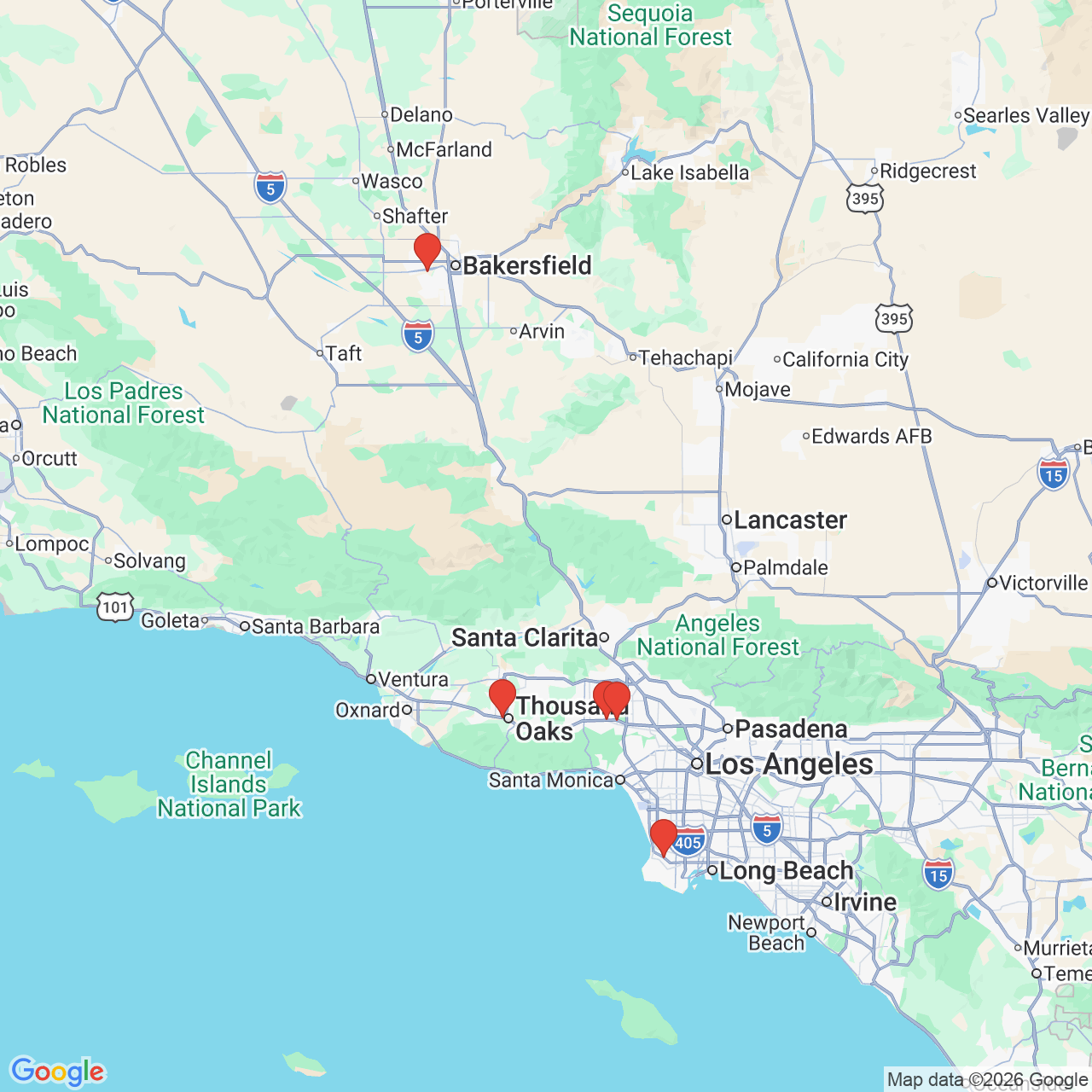
We have 5 locations the greater Los Angeles area
“Dr. Vermesh is a wonderful doctor... Every appointment, we felt valued and heard. Dr. Vermesh was prompt, prepared, and very focused on our case. My wife is currently 4 months pregnant after a successful transfer, and we’re so grateful for the high-quality, personalized care we received.” – Khari, 5-Star Review
“Wow, let me start by expressing my gratitude to Dr. Tolou and her team for their exceptional support throughout my journey. From scheduling, medication, to travel arrangements, they were amazing. I feel incredibly blessed... Keep Being Awesome Team.” – Juana, 5-Star Review